Document Redaction Software: Key Features to Look For in 2026
Searching for document re

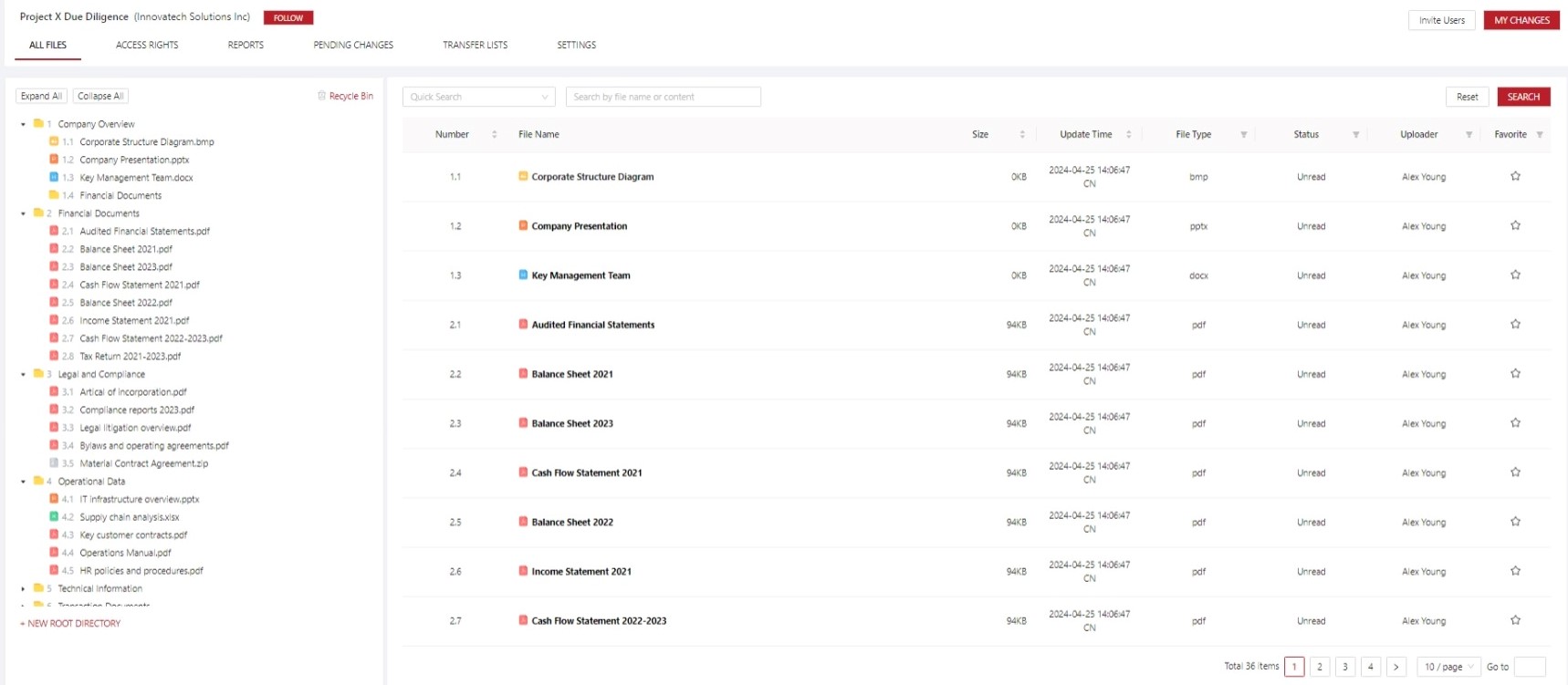
In the high-stakes arena of 2025 dealmaking—where global M&A volumes are projected to exceed $4.5 trillion amid AI-fueled efficiencies and regulatory scrutiny (per PwC’s 2025 Global M&A Industry Trends)—Virtual Data Rooms (VDRs) have become the linchpin for secure collaboration. Yet, amid the flood of sensitive documents exchanged during due diligence (DD), mergers, IPOs, and financings, one feature stands out as a game-changer: data redaction. This isn’t just a compliance checkbox; it’s a strategic shield that enables controlled sharing, slashing breach risks by up to 70% (IBM’s 2025 Cost of a Data Breach Report) while accelerating timelines. As cross-border deals proliferate—up 32% year-over-year (Deloitte)—redaction ensures that personally identifiable information (PII), financial secrets, and IP details are revealed only on a need-to-know basis.
But what exactly is redaction, and why does it matter? How do leading VDR providers stack up in 2025? And why does bestCoffer emerge as a frontrunner with its innovative, file-generating approach? This guide dives deep, drawing from G2, DataRooms.org, and provider benchmarks, to equip dealmakers with actionable insights. We’ll unpack the essentials, compare capabilities, and spotlight how redaction transforms risk into opportunity.
At its essence, data redaction is the process of permanently obscuring or removing sensitive elements from documents—be it text, images, or metadata—before sharing them in a VDR. Unlike simple watermarks or view-only restrictions, redaction alters the underlying file: blacking out names, blurring faces in photos, or replacing financial figures with placeholders like “[REDACTED]”. This creates a “sanitized” version that’s compliant and auditable, ensuring the original remains untouched in your secure vault.
Powered by AI in modern VDRs, redaction leverages natural language processing (NLP) and machine learning to auto-detect patterns—e.g., Social Security numbers via regex, or faces in clinical trial images via computer vision. Human oversight via previews and edits prevents over-redaction, maintaining document usability. Per V7 Labs’ 2025 AI Data Room Review, advanced tools now handle 50+ file formats with 95% accuracy, up from 80% in 2023, thanks to large language models (LLMs) trained on anonymized datasets.
Key Scenarios for Redaction:
These aren’t edge cases—Gartner’s 2025 M&A Report notes 78% of deals involve redaction to mitigate privacy risks, with delays averaging 12 days without it.
Primary Industries and Users: Redaction is mission-critical in regulated sectors where data exposure can trigger fines (e.g., GDPR’s €20M cap) or deal collapses:
For these users—executives, lawyers, analysts—redaction isn’t optional; it’s a trust multiplier. In a post-2024 breach wave (up 15%, per Verizon DBIR), it empowers “share more, reveal less,” fostering faster closes without compromising integrity.
The VDR market in 2025 is crowded, with 20+ providers vying for dominance (DataRooms.org). Redaction has evolved from manual blackouts to AI-orchestrated precision, but capabilities vary wildly— from basic text masking to multimodal (text+image) processing. Below, we compare six leaders based on G2 ratings (4.5+ average), Digify’s 2025 Provider Matrix, and hands-on benchmarks from DealRoom.net. Focus: AI automation, file support, accuracy, integration, and pricing impact (mid-tier M&A project, ~$1K-3K/month).
| Provider | AI Automation Level | File Formats Supported | Key Strengths | Limitations | G2 Redaction Score (2025) | Pricing Adder for Redaction |
|---|---|---|---|---|---|---|
| Datasite | High (Pattern recognition + custom lists up to 20 terms/file; bulk suggestions) | PDFs, Word, scans (text-focused; basic image blurring) | 97% accuracy on PII; integrates with DD workflows; notes per category. | Limited multimedia (no video); English-centric. | 4.7/5 | +$500/month (Enterprise) |
| Intralinks | High (Automated bulk for PDFs; 50+ languages) | PDFs, Office docs, images (AI detects multilingual PII) | Fast processing (500+ files/hour); seamless VDR upload/redact cycle. | Manual overrides needed for complex visuals; higher learning curve. | 4.6/5 | +$400/month (VDRPro) |
| iDeals | Medium-High (AI detection/removal; up to 512K chars/doc) | PDFs, Word, Excel, images (deletes data permanently, not just hides) | Intelligent previews; multilingual search (16 langs); HIPAA/GDPR templates. | Slower bulk (200 docs max); no native video. | 4.8/5 | +$300/month (Core Plan) |
| Ansarada | High (AI-Redact + AI-Sort; bulk 500 docs) | All Office, PDFs, scans (auto-sorts pre-redact) | Workflow integration (Q&A tie-ins); 92% accuracy with human edits. | Over-redacts in unstructured data; APAC-focused support. | 4.5/5 | +$450/month (Premium) |
| Firmex | Medium (Integrated Redact All; rule-based hiding) | PDFs, images (thumbnail previews; PII containment) | User controls (who can redact); no VDR exit needed; Excel exports. | Less AI (manual-heavy); basic accuracy (85%). | 4.4/5 | +$250/month (Flat) |
| DealRoom | Medium (AI extraction + redaction in diligence playbooks) | Office docs, PDFs (links to requests for targeted masking) | Deal-specific automations; real-time audits. | Fragmented (not standalone tool); image support nascent. | 4.6/5 | +$350/month (Net) |
Insights from the Comparison:
This matrix reveals a maturing field, but one where depth varies: Enterprise giants prioritize scale, while agile players emphasize ease. For global teams, residency compliance (e.g., EU data stays in EU) is non-negotiable, amplifying redaction’s role in sovereignty.
Amid this landscape, bestCoffer—Lianwei Group’s flagship VDR, backed by 25 years of expertise, 1,200 professionals, and $8T+ client AUM—redefines redaction as a proactive powerhouse. Unlike competitors’ overlay methods (e.g., Firmex’s hiding), bestCoffer’s generative new-file approach creates entirely fresh, redacted documents: Upload originals, AI processes, and output sanitized versions for sharing—originals stay pristine in your vault. This “file-forging” minimizes reversal risks, with editable previews ensuring precision.
Core Advantages:
Real-World Edge: A Biotech License-Out Scenario Picture a Shanghai pharma firm licensing IP to a U.S. partner: 2,000 docs, including image-heavy trials. Competitors like Datasite might redact text swiftly but require external tools for photo blurring, adding 15 hours. bestCoffer? One-click batch: AI generates new files with faces/IDs masked, translates to English (local deployment, no data travel), and deploys to U.S. node for compliant sharing. Permissions limit partners to view-only redacted versions; audits reveal 98% engagement without leaks. Result: 25% faster close, zero fines—mirroring Lianwei’s 200+ client successes in bio/pharma.
Users laud its no-code extensibility: APIs integrate with OA/finance systems for auto-redaction on upload, plus a Knowledge Base for querying redacted docs (“Summarize masked risks?”). At project-based pricing (~$1K/month mid-tier), it’s 20% more cost-effective than Datasite for globals.
Potential Drawbacks and Mitigations: bestCoffer’s China roots excel in APAC but may need custom tuning for niche U.S. regs—pilot via free demos. Always layer with human reviews; its previews make this effortless.
In 2025, data redaction isn’t a bolt-on—it’s the backbone of resilient VDRs, turning compliance burdens into competitive moats. While Datasite and Intralinks lead in raw power, and iDeals/Ansarada in intuition, bestCoffer’s generative files, ironclad permissions, and site-flexible security position it as the holistic choice for industries like pharma and finance navigating global waters. As regs tighten (e.g., 2025 PIPL amendments), investing in robust redaction yields 4x ROI via averted risks and sped workflows.
Evaluate providers via trials: Upload a sample dossier, test batch redaction, and simulate cross-border shares. In dealmaking’s trust economy, the right redaction doesn’t just protect—it propels. For bio/med firms or PE pros, bestCoffer isn’t just compliant; it’s clairvoyant.
Searching for document re
In 2026, data privacy and
In 2026, with AI-driven s